What Does a Sport Psychologist Do for Young Athletes?
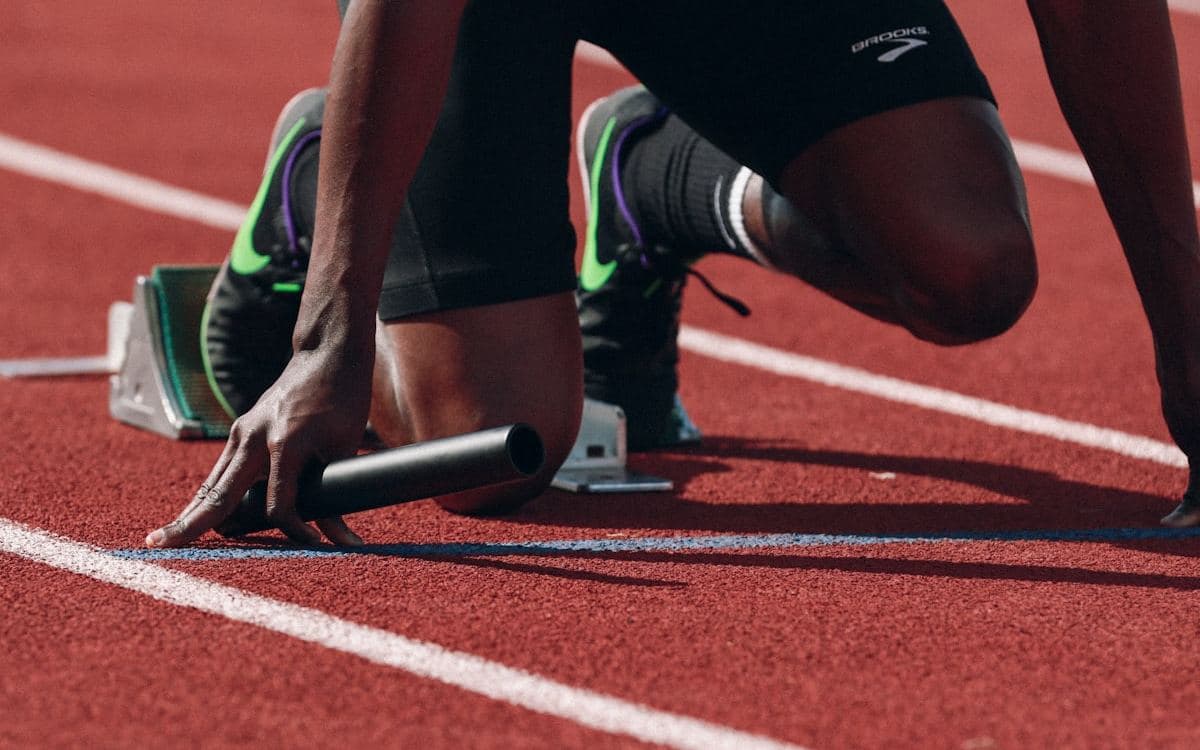
Quick answer: A sport performance psychologist teaches athletes the mental skills that let their physical training show up under pressure. That means pre-performance routines, attention control, self-talk, visualization, and structured recovery from mistakes. It is skill training rather than fixing something broken, and it is usually short and concrete rather than open-ended.
What does sport performance work actually cover?
The core curriculum is small and teachable: a consistent pre-performance routine, a reset procedure for after a mistake, attention control that keeps focus on the next action rather than the scoreboard, deliberate self-talk, and visualization rehearsal of specific game situations. Athletes practice these the way they practice a jump shot, with reps and feedback.
Beyond the skills, the work often addresses the story an athlete tells about competition. A high school player in Bergen County who believes one error defines the game will play tight regardless of technique. Changing that belief changes the performance.
Is this therapy or is it coaching?
It sits between the two and is defined by the goal. When the focus is performance, the sessions look like skill training: assess, teach a technique, assign practice, review. When something clinical is present such as an anxiety disorder, depression, disordered eating, or the aftermath of an injury, that is treated as therapy with the appropriate clinical approach.
Many young athletes present with both. A swimmer whose pre-race nerves have become genuine panic needs anxiety treatment and a routine. A good practitioner can tell the difference and will say clearly which one you are getting.
Which young athletes benefit most?
The clearest cases are athletes who perform noticeably better in practice than in competition, athletes stuck after an injury or a specific bad experience, athletes whose confidence collapses after one mistake, and athletes carrying heavy expectations from recruitment or family. If the gap between training quality and game output is obvious, mental skills are usually the missing piece.
Age matters less than motivation. Middle school through college all work, provided the athlete wants to be there. Athletes dragged in by a parent make slower progress, which is worth naming honestly before starting.
What does visualization actually involve?
Visualization is structured mental rehearsal of a specific sequence, done in detail and from the athlete's own point of view, including the physical sensations and the sounds of the environment. It is not vague positive imagery. A goalkeeper rehearses the plant foot, the angle, the release of the shot, and the reaction, repeatedly and in real time.
It works best paired with a reset routine. Rehearse the good rep, and separately rehearse recovering from the bad one, because the second scenario is the one that decides most games. Both are practiced away from competition until they are automatic.
How long does it take and what does it cost?
Many athletes do a focused block of six to twelve sessions, often timed before or early in a season, then check in periodically. Sessions typically run 50 minutes. Private-pay fees in Northern New Jersey fall within a regional range, and it is reasonable to ask about that on a first call.
Fort Lee Therapy and Psychoeducational Services provides sport performance work for athletes across Fort Lee, Englewood, and Bergen County at 155 N Dean Street, Suite 3B, with telehealth available across New Jersey for athletes whose training schedules make travel hard. To find out whether this fits your athlete, Dr. Lisa Barrows offers a free 15-minute phone consultation at (201) 218-9771.
Working on this with your own family? Sport performance therapy for student and competitive athletes
Disclaimer: This article is for informational purposes only and does not constitute medical or psychological advice, diagnosis, or treatment. Always consult a qualified mental health professional for guidance specific to your situation.